Whole-Home Mold Remediation in Gonzales, LA
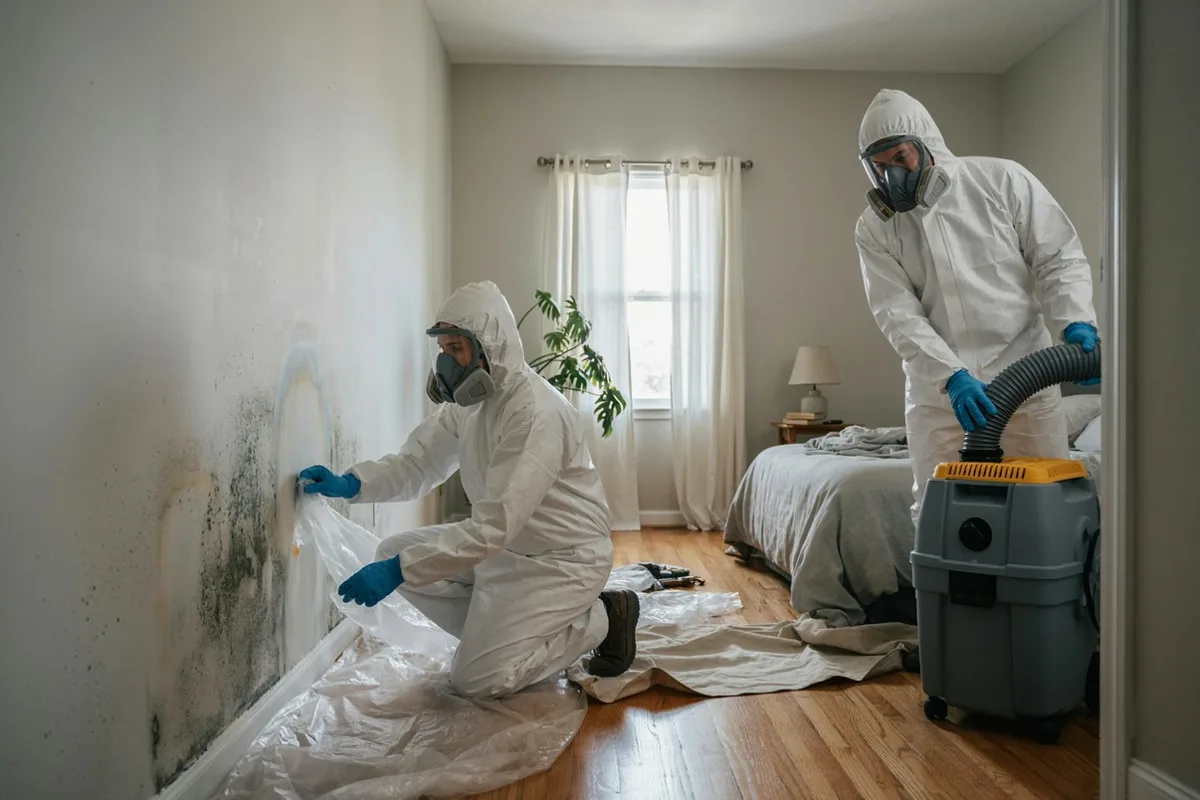
Some houses in Ascension have a mold problem in more than one room, and it usually got there one of three ways: water came across the slab in 2016 and the walls were closed back up on a schedule, a leak ran for months inside a wall that touches two or three rooms, or the house sat empty through a summer with the air conditioning off. When the growth is on several walls and the smell is everywhere instead of somewhere, that is a whole-home job. Call and tell us how many rooms.
How the job is planned
We walk the house, take moisture readings on every wall that shows staining and every wall next to it, and draw the boundaries of the work before anything is cut. The house gets divided into zones, each sealed and put under negative pressure in turn, so that the rooms we haven’t reached yet aren’t seeded by the rooms we’re working in. In flooded slab houses that usually means the bottom two to four feet of drywall around the affected rooms. In a long-leak house it means following the water instead of the stain.
When it stopped being a small job
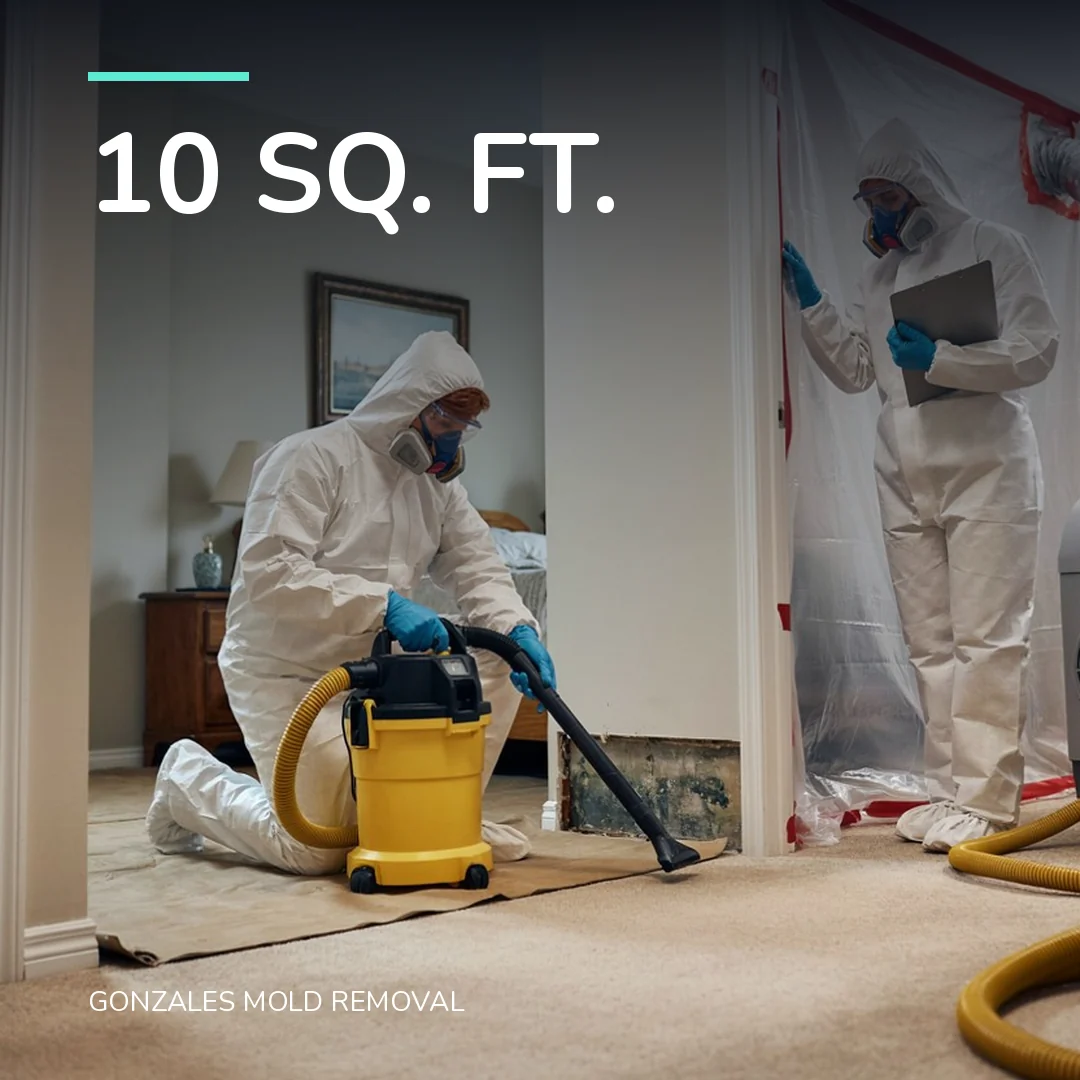
- EPA’s line for professional help is about ten square feet — a whole-home job is that many times over.
- One wet weekend can be enough to start growth in every room the water reached.
- Old water damage can matter again when it’s time to sell, because the disclosure form asks about it by name.
- Louisiana requires a state mold remediation license for jobs over $7,500, which most whole-home work is.
Tell Us How Many Rooms, 24/7
What comes out and what stays
Drywall, insulation, carpet and pad, ceiling tile, cabinet toe-kicks and bottom shelves that were wet — anything porous that got moldy comes out and is bagged inside the sealed zone. Studs, bottom plates, and the slab stay and get cleaned in place, HEPA-vacuumed, and dried until the wood reads below twenty percent moisture, which is LSU AgCenter’s threshold before a wall is closed. Nothing gets rebuilt over a wet plate. Most whole-home jobs run one to two weeks, and you get a schedule before we start.
Ascension notes
The 2016 flood houses on the Amite side of the parish are the classic case here, especially ones rebuilt quickly with only about 23 percent of Ascension homes carrying flood insurance to pay for it. The other common one is newer: a house in Prairieville or Dutchtown that went on the market, sat closed and unconditioned for a season, and grew mold on the walls of every room. You get a written report at the end of either job, as Louisiana law requires, listing what came out of each room and why.